My focus is building systems that balance creativity with clarity. Leading teams toward work that’s intentional, emotional, and built to endure.
Cinematic Storytelling at Global Scale
I lead end-to-end brand storytelling across LIXIL’s portfolio, including GROHE, American Standard, DXV, and INAX, guiding vision, narrative, and production across complex, multi-team initiatives. The work is designed to scale across digital, retail, and global touchpoints while maintaining clarity, craft, and brand integrity.
Hands-on, purpose-driven filmmaking under real-world constraints.
At 4ocean, we didn’t have a big budget, but that never stopped us from creating something powerful. I directed and shot this commercial with a small, scrappy team, working side by side with the founders to tell a story that mattered. The spot aired nationally for over a year, helping to grow the brand and raise millions for ocean cleanup. It’s proof that passion and collaboration can outshine production scale when the message is real.
Photography and 3D rendering shape the visual language that carries a story beyond motion.


















Writing
-
I write to clarify how I see creative work and the systems behind it. Writing forces me to slow down, research, and engage more deeply with real-world challenges. It’s how I stay sharp, continue learning, and make sense of a changing creative landscape.
-
Artificial intelligence is moving fast, but top leadership’s expectations are moving even faster. I say this as someone in leadership myself, but also someone who has always kept his hands dirty. Since I was young, my father, an engineer and an artist, engrained in me a lesson I’ve never forgotten: keep up with technology or get left behind.
Today, I see executives rushing to declare AI strategies and talk about automation, breakthrough content, and business transformation. Boardrooms are full of confident predictions. Where are they getting this from? Mostly LinkedIn videos, conference stages, headlines, and TV segments — places where jargon sells better than truth. They hear buzzwords, not the grind of actually using the tools.
Here’s the problem: many leaders don’t actually understand the reality. They’re not even using ChatGPT to clean up their own emails, yet they envision cutting humans out of the process entirely. Increasingly, I hear executives ask, “Can’t we just AI it?” as if the phrase itself solves the problem. They think AI is a magic button. They use the term as a catch-all, while skipping the hard part: learning the technology themselves.
Meanwhile, the real transition looks very different. For those of us leading creative and operational teams, human–AI collaboration is messy, confusing, and misunderstood by the very leaders most eager to capitalize on it. What they fail to see is that their own positions may be just as vulnerable. The lesson for leadership is simple: don’t jump the gun, don’t assume AI is a shortcut, and don’t believe you’re above being replaced. Learn it, use it, and integrate it, or risk being left behind right alongside everyone else.
The Hype vs. the Hands-On
The gap between presentation and practice is reinforced by how AI is marketed. On social platforms I am constantly sent videos of enthusiastic salespeople touting new buzzwords and visionary ideas. But when I watch closely, I do not see people engaging with the technology itself. I see performers, professionals selling possibility more than showing process.
A recent article on “Discovery Engine Optimization” — the claim that SEO is being replaced by AI-driven “DEO” — is a good example. The piece was filled with new terms, frameworks, and tool recommendations. But what struck me most was what was not there: any firsthand use of AI. No trial and error, no messy outputs, no lessons learned from failure. It was theory dressed up as innovation. I see this again and again: smart people talking about AI without ever touching it. And for those who also do not use it, it sounds revolutionary.
Contrast that with what happens when you actually use the tools. I recently ran a trial of Runway, one of the leading AI video platforms. On their website and in their demos the work looks absolutely futuristic. But behind the curtain, it is a very different story.
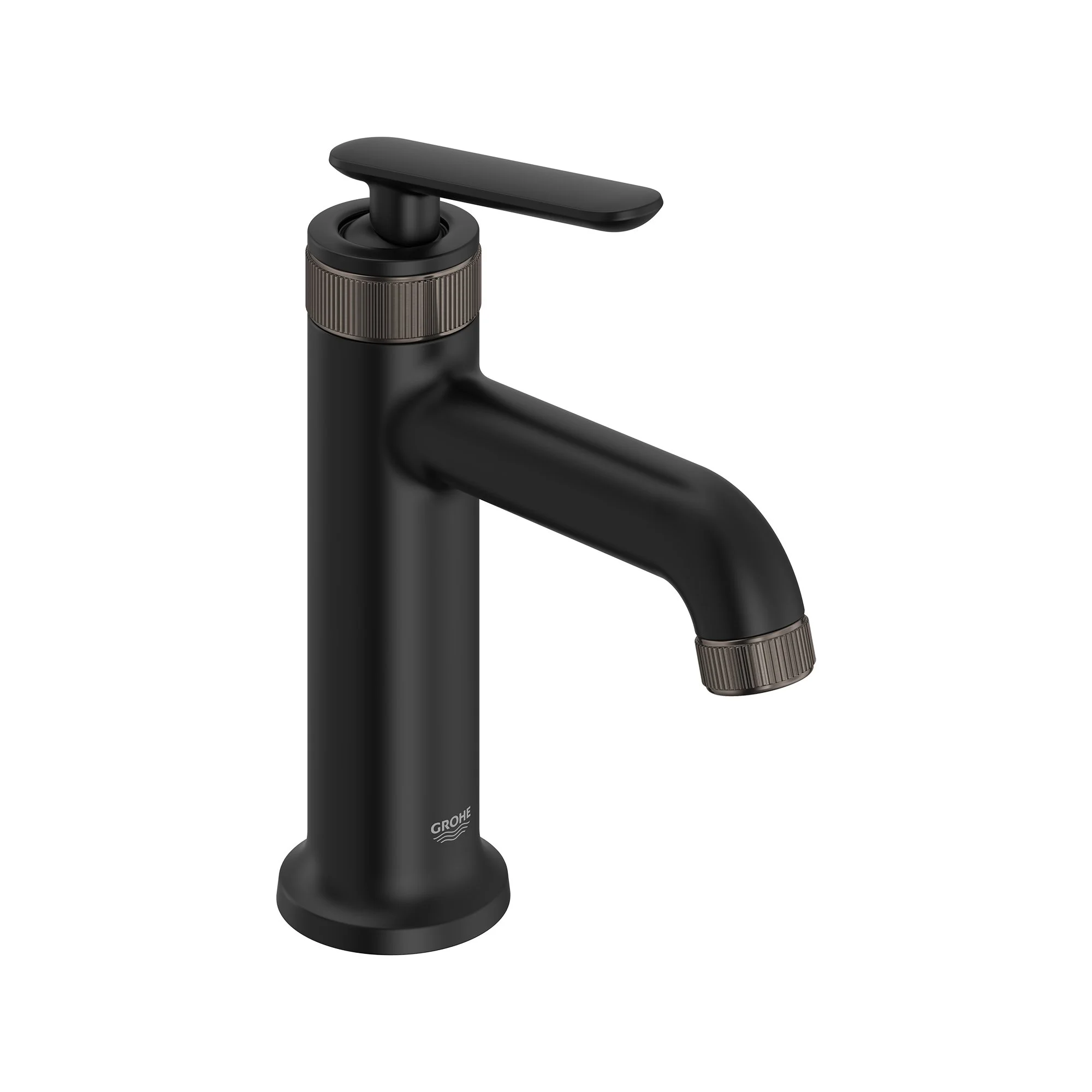
My team had 30,000 credits to test. Our first experiment was simple: we all used the same photo of a nice kitchen, with the faucet as the star of the show. Across multiple attempts we burned through 3,000 credits and ended up with exactly one usable shot. If this had been a paid subscription, at one dollar per credit, that single shot, a basic Ken Burns pan into a kitchen, would have cost three thousand dollars. The software was clunky. Outputs warped unpredictably. Ask the system to turn on the faucet and the result was water pouring out of the ceiling. Exported files required heavy upgrading just to approximate 4K resolution. And the pricing was staggering: pitched at 250,000 dollars for 150 seats, eventually negotiated to 50,000 dollars for 10 seats. For now, we will not be moving forward with the platform. Not yet, anyway.
Honestly, when you look through Runway’s sleek portfolio I do believe we are seeing the future. But today I can only imagine how many people were working behind the scenes, and how many credits were burned to create those examples. Even then, I cannot help but wonder how much of it was polished or doctored. Still, make no mistake, this is coming.
That kind of gap between the polished promises of AI marketing and the reality of limited, expensive, unpredictable tools is what many organizations will face over the next few years. And here is the kicker: even when you break it down for top leadership in plain language, even when you show them real examples, the reality rarely sticks. From costs to results, I still hear the same question: “Can’t we just AI it?”
The Human Side of Collaboration
Another overlooked factor is how employees and managers perceive AI. Too often it is introduced as a replacement rather than an augmentation. That framing breeds resistance and fear. In reality, AI works best as a collaborator, freeing humans from repetitive tasks and amplifying creativity, not replacing judgment.
Take ChatGPT. I use it to refine communications. Every email, every draft, every note I send goes through an AI-assisted polish. The result is not work being done for me, but work being made clearer, faster, and more professional. Yet most colleagues I know are still hesitant. They open a tool once or twice, expect it to think for them, and give up when it does not deliver. They miss the point: AI is not here to replace thinking, but to accelerate it.
This mindset gap matters. Leaders who treat AI as a shortcut will create cultures of fear and resistance. Leaders who adopt it as a partner will unlock speed, creativity, and learning across their teams. Those who make the shift will move ahead. Those who refuse will be left behind.
Looking Ahead
Despite the messiness of the present, the trajectory is clear. AI will be transformative. Tools that today feel clunky and overpriced will improve at an exponential pace. Six months from now, a breakthrough could reshape what is possible. Within two years, the baseline for AI collaboration will be far beyond where we are now.
Of course, there is the cheeky doomsday version of this story: we hand the reins to machines, and one day we wake up to find they have written us out of the picture entirely. While that makes for good late-night science fiction, the real risk for leaders is more immediate and practical. Studies already show automation displacing tasks across industries, and jobs reports continue to warn of massive workforce shifts. The “future of work” is no longer a panel discussion topic. It is happening in real time, even through these clunky beginnings.
The challenge for leaders today is not to wait for a perfect tool, but to engage with the imperfect ones. To experiment, to learn, to build internal fluency. To see past the sales pitches and invest in developing a culture where AI is tested, understood, and integrated.
The future of human–AI collaboration will not be defined by the companies that treat AI as a quick fix. It will be defined by those that embrace the messy transition, learn through practice, and build the organizational muscles required to turn hype into sustainable advantage.
It brings me back to the lesson my father, an engineer and an artist, drilled into me early on: keep up with technology, or be left behind.